Chicken Chili
The Table | A Collection of Organic Nourishment by Raychel Fox
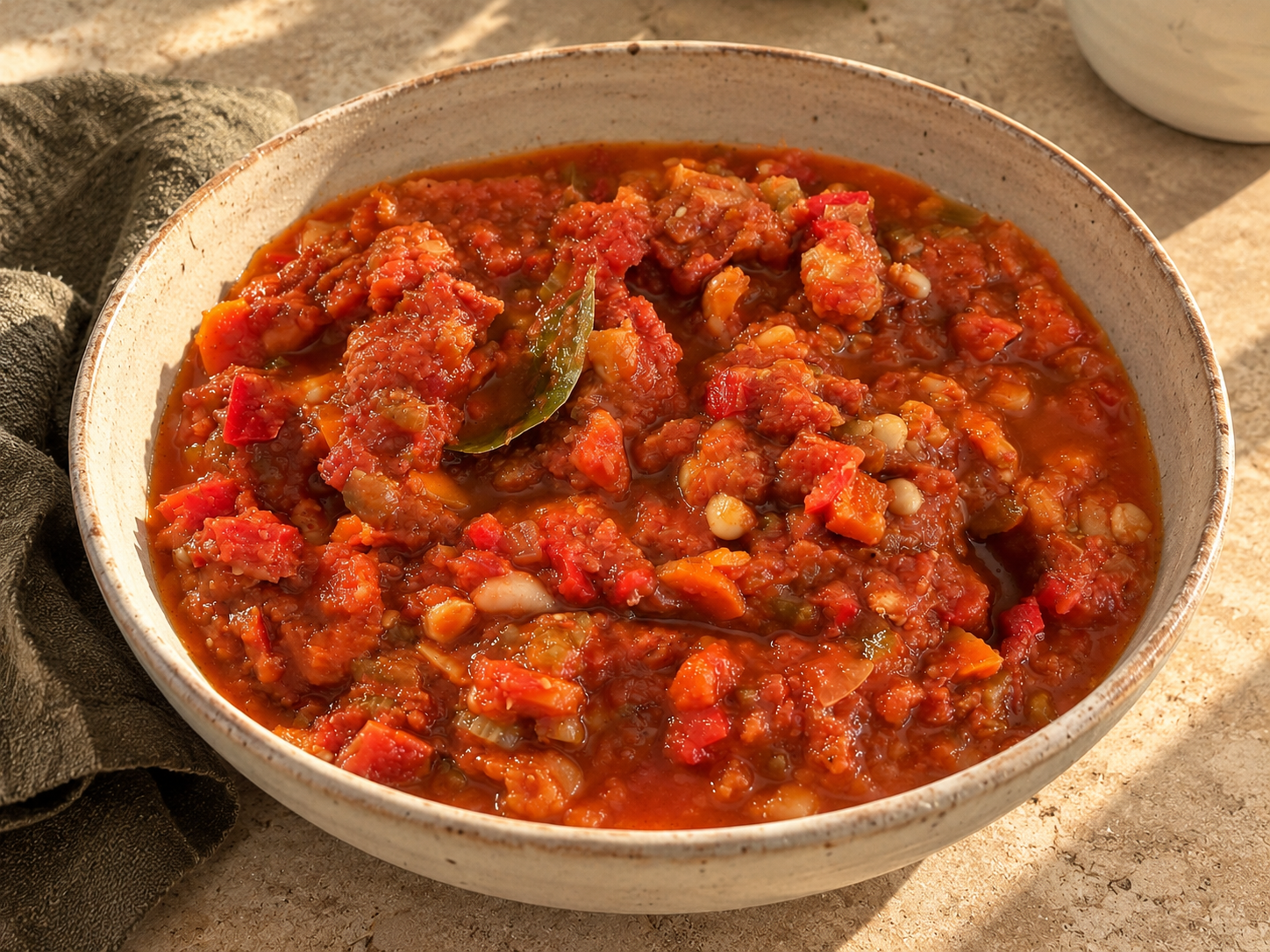
I've always thought chili was one of those dinners that gets better the longer it sits. Maybe that's why I love making a big pot of it. This version has red bell peppers, cannellini beans, plenty of tomatoes, and chicken added toward the end so it stays tender. And as much as I love chili in a bowl, spooning it over a baked Japanese sweet potato might be my new favorite way to eat it.
Ingredients
2 large organic red bell peppers, diced
½ organic large red onion, finely chopped
3 large organic garlic cloves, freshly minced
1 large organic carrot, finely diced
1 large organic celery stalk, chopped
2 containers organic cannellini beans, drained and rinsed (approximately 13 oz each)
2 cartons Pomi finely chopped tomatoes (approximately 26 oz each)
2 organic boneless, skinless chicken breasts, cut into small bite-sized pieces
Extra-virgin olive oil, for sautéing and seasoning the chicken
1½ tablespoons chili powder
1 teaspoon paprika, plus 1 teaspoon for the chicken
1 teaspoon curry powder
1 teaspoon dried oregano
3 large bay leaves, or approximately 5 smaller leaves
½ teaspoon Himalayan pink salt, plus more to taste
Japanese sweet potatoes, for serving
Method
Begin with the onion and garlic.
In a large, heavy-bottomed pot, warm a little extra-virgin olive oil over low heat. Add the chopped red onion and freshly minced garlic. Cook gently, stirring occasionally, until the onion becomes translucent and the garlic is fragrant, without browning.Soften the vegetables.
Add the diced red bell peppers and carrot, followed by the chopped celery and celery leaf. Stir everything together and cook over low heat for approximately 15 minutes, stirring occasionally, until the vegetables begin to soften.Add the tomatoes and beans.
Pour in both cartons of Pomi finely chopped tomatoes and add the drained cannellini beans. Stir well, combining everything with the softened vegetables.Season the chili.
Add the chili powder, paprika, curry powder, oregano, bay leaves, and ½ teaspoon Himalayan pink salt. Stir thoroughly until the seasonings are evenly incorporated.Let the chili simmer.
Continue cooking over medium-low heat at a gentle simmer for approximately 60 minutes, stirring frequently so nothing sticks to the bottom. The vegetables should become tender as the tomatoes and seasonings cook together.Prepare and add the chicken.
Cut the chicken breasts into small, evenly sized pieces. In a separate bowl, toss with a little olive oil, paprika, and apinch of Himalayan pink salt. Add the seasoned chicken directly to the chili during the final 10 minutes of cooking, stirring to distribute it evenly. Make sure the chicken reaches an internal temperature of 165°F before turning off the heat.
Let the chili rest.
Turn off the heat and allow the chili to sit for approximately 15 minutes. Remove the bay leaves, stir, and taste. Add more salt if needed.Serve over a Japanese sweet potato.
While the chili cooks, scrub the Japanese sweet potatoes and pierce each a few times with a fork. Bake at 400°F for approximately 45–50 minutes, depending on size, until completely tender. Split each potato open and spoon the warm chicken chili generously over the top.
Raychel’s Notes
I baked a Japanese sweet potato separately and spooned the finished chicken chili over it. The potato's naturally sweet, creamy interior was delicious with the tomatoes, beans, and spices. I absolutely loved this combination.
Although I made this version with chicken, I think flank steak or another tender cut of beef would also be delicious. Cooking times would need to be adjusted depending on the cut and size of the pieces.
I use organic ingredients only, including chicken from my local farmers' market. That's simply how I prefer to cook at home. You can absolutely make this recipe with whatever fresh ingredients are available to you; organic is not required.
I recommend starting with ½ teaspoon Himalayan pink salt and adjusting toward the end for your taste preference; the amount needed will depend on the tomatoes, beans, and your own preference.
And best of all, this chili makes wonderful leftovers. The flavors are even better the next day, so consider baking extra Japanese sweet potatos to enjoy with another serving.
Enjoy!